
Thyroid Function Home Test Kit
Assess thyroid function and indicate abnormal thyroid activity

Thyroid Function Home Test Kit
Finger-prick blood home test kit, clinic visit or home nurse visit


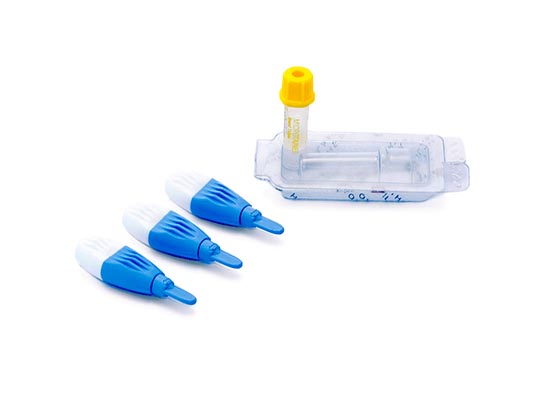
Collect your sample easily from home
Thyroid Function Home Test Kit
Finger-prick blood home test kit, clinic visit or home nurse visit



Thyroid Function Home Test Kit
Assess thyroid function and indicate abnormal thyroid activity
£59.00
Includes FREE delivery!
When your energy, weight, mood, heart rate, or temperature tolerance feels out of sync, it is easy to blame stress, sleep, or life stage. Thyroid changes can be subtle, and symptoms often overlap.
This Thyroid Function test measures Free Thyroxine (FT4), Thyroid Stimulating Hormone (TSH), and Triiodothyronine (T3) to show how your thyroid hormones are balanced and how your body is regulating them. If you are taking thyroid medication, these results can support a more informed discussion with your clinician about how treatment is responding.
If you want clearer answers than symptoms alone can provide, this test offers a straightforward way to check your thyroid function at home and act on results with confidence.
How would you like to take your test?
How would you like to take your test?






What the Thyroid Function test is for
The Test Your Thyroid home test kit measures your blood levels for the two key thyroid hormones; Free thyroxine and TSH. Precisely measuring these biomarkers with a clinical test gives a reliable view of your thyroid function and ability to regulate your metabolism.
The thyroid is a small, butterfly-shaped gland located in your neck. The thyroid produces hormones which act on other parts of the body to influence and regulate their metabolism (energy usage) as well as a host of other functions.
When your body releases too much thyroid hormone (Hyperthyroidism - an overactive thyroid) or too little (Hypothyroidism - an underactive thyroid) then some cells and tissues in your body work faster or slower than they should do resulting in symptoms such as palpitations and excessive sweating or tiredness and weight gain.
This test panel tests for two key Thyroid hormones; Free thyroxine which directly increases metabolism, and TSH which is released by the pituitary gland to regulate thyroxine production.
If you are taking thyroid replacement medication, such as levothyroxine, or anti-thyroid medication such as carbimazole or propylthiouracil, then this test can be used to assess the response to this treatment and any necessary adjustments can be made. Please note that the test will require interpretation by your doctor prior to any medication changes.
Small changes,
informed by
real data,
compound fast
Find out where to start...
What's included in your test?
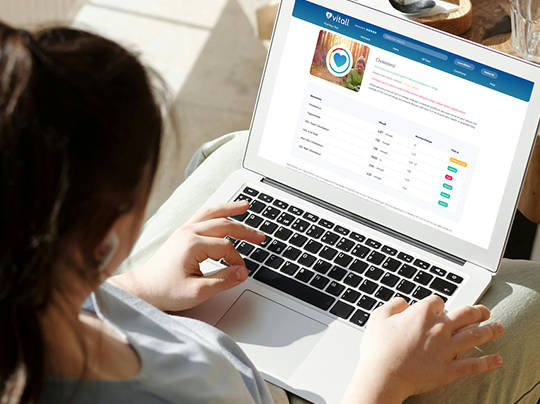
The following sample guidance is required for this test, please follow carefully:
- One easy self-collection sample
Get tested fast with a home test kit, using a finger-prick blood sample. Collect easily with no needles, with free priority postage to an accredited laboratory.
You can also opt for a clinic visit, for professional sample collection by experienced staff, in a comfortable & caring environment.
This Thyroid Function test measures the following biomarkers to assess thyroid function and indicate abnormal thyroid activity.

Specialist Tests
Need more details?
Learn how the self collection process works, what's in the kit, and your options for clinic and home nurses visits.
How this works ›Why take the Thyroid Function test?
This test is suited to adults who want a clear check of thyroid function when symptoms could be thyroid-related, such as persistent fatigue, unexplained weight change, low mood or anxiety, sleep disruption, heat sensitivity, sweating, tremor, hair loss, constipation, muscle cramps, palpitations, or a slower or faster than normal heart rate.
It is also for those with irregular periods, low libido, poor memory, tingling or pain in the hands, difficulty gaining weight, or a history of borderline thyroid results who want objective data rather than guessing from symptoms alone.
If you are taking thyroid medication, you can use this test to help assess how treatment is responding and support a more informed discussion with your clinician before any changes are made.
- have a low sex drive & loss of libido
- Are experiencing hair loss
- Are overly sensitive to heat
- Experience irregular periods
- Experience poor memory
- Experience tingling or pain in your hands
- Experience unusual tremors
- Find it difficult to sleep properly
- Have a slower than normal pulse (heart rate)
- Have had weight gain
- Have had weight loss
- Have higher than normal heart rate
- Have previously had borderline thyroid tests
- Often feel anxious for no reason
- Struggle to gain weight
- Suffer from chronic fatigue & tiredness
- Suffer from constipation
- Suffer from depression
- Suffer from muscle cramps
- Sweat excessively or have a fever
Order your Thyroid Function test and get the insights you need to feel your best.
Medical disclaimer: This test provides health information and is not a substitute for clinical assessment, diagnosis or treatment. Results should be considered alongside your symptoms, medical history and any medicines you take. If you are concerned about your results or your health, speak to a qualified healthcare professional. For urgent concerns, contact NHS 111, your GP, or call 999 in an emergency.
Expert Analysis In An Accredited Laboratory
Once your sample reaches the UKAS-accredited lab, the magic begins. But this isn't simple science – we insist on state-of-the-art automated technology to ensure your results are processed with unmatched accuracy and efficiency.
- UKCA marked test kits for full regulatory compliance.
- IVDD certified diagnostics for total quality reassurance.
- Medically led UKAS accredited laboratory testing for accurate results.



Dr. Kate Bishop
Chief Scientific Officer
"All testing is conducted by healthcare professionals in a medically-led laboratory. Accredited lab testing is the best way to be confident that your test results are accurate. Get tested now for complete reassurance."
Delivery and results
The Thyroid Function test offers a Finger-prick blood home test kit, clinic visit or home nurse visit for sample collection. Kits are posted to your home free of charge.
Easily sampling from home or at a clinic offers you the most convenient and stress-free way to get tested. Your test also includes free 24 hour tracked sample return to the laboratory.

1. Order Your Test

2. Post Your Samples

3. Get Your Results
Thyroxine (T4) is the most prevalent thyroid hormone produced by the thyroid gland.
It is responsible for many vital roles in the body including, metabolism, heart and muscle function, brain development and bone maintenance.
Measurement of Free Thyroxine (FT4) is used to assess thyroid health.
| Test | Result | Reference | Status |
|---|---|---|---|
| Free Thyroxine | 14.8pmol/l | 12.0 - 22.0 | Normal |
14.8 Thyroxine (T4) is the most prevalent thyroid hormone produced by the thyroid gland. It is responsible for many vital roles in the body including, metabolism, heart and muscle function, brain development and bone maintenance. | |||
| Thyroid Stimulating Hormone | 1.18mIU/L | 0.27 - 4.2 | Normal |

Traffic Light System Instantly see which health markers are in a healthy range (green), borderline (yellow), or need attention (red).

Detailed Explanations Each marker includes an overview of its role in your body, what it means to have high or low levels, and actionable tips to improve.
Tracked Changes See how your health markers have changed over time, track your progress, and optimise your health.

Expert Guidance We don't just hand over data – we empower you with insights to make informed decisions about your health.
What happens after your results?

Testing shows where you are today. Prevent helps you focus on where you want to be.

Using your test results, metrics and symptoms, you can gain further insights to achieve your health goals.

Connect with expert medical partners focused on helping you achieve better health.

We are highly selective over who we choose to work with, so you can be confident you are in good hands.
What people say about this test

Ben
Hannah
Gareth
Frequently Asked Questions
1. Thyroid Function Tests [Internet]. Lab Tests Online UK - Association for Clinical Biochemistry and Laboratory Medicine. 2019 [cited 29 June 2021]. Available from: https://labtestsonline.org.uk/tests/thyroid-function-tests#:~:text=Currently%2C%20the%20majority%20of%20UK,the%20bridge%20of%20your%20nose.
2. Thyroid function tests - a complete guide [Internet]. British Thyroid Foundation. 2021 [cited 29 June 2021]. Available from: https://www.btf-thyroid.org/thyroid-function-tests
3. Underactive thyroid (hypothyroidism) [Internet]. National Health Service - UK. 2020 [cited 29 June 2021]. Available from: https://www.nhs.uk/conditions/underactive-thyroid-hypothyroidism/diagnosis/
4. Hyperthyroidism [Internet]. Thyroid UK. 2021 [cited 29 June 2021]. Available from: https://thyroiduk.org/if-you-are-hyperthyroid/
5. Current BTA guidelines and statements [Internet]. British Thyroid Association. 2021 [cited 29 June 2021]. Available from: https://www.british-thyroid-association.org/current-bta-guidelines-and-statements
6. Thyroid disease: assessment and management [Internet]. National Institute for Health and Care Excellence. 2019 [cited 29 June 2021]. Available from: https://www.nice.org.uk/guidance/ng145/chapter/Context
7. Favresse J, Burlacu M, Maiter D, Gruson D. Interferences With Thyroid Function Immunoassays: Clinical Implications and Detection Algorithm. Endocrine Reviews. 2018;39(5):830-850.
8. Sheehan M. Biochemical Testing of the Thyroid: TSH is the Best and, Oftentimes, Only Test Needed – A Review for Primary Care. Clinical Medicine & Research. 2016;14(2):83-92.
9. Esfandiari N, Papaleontiou M. Biochemical Testing in Thyroid Disorders. Endocrinology and Metabolism Clinics of North America. 2017;46(3):631-648.
10. Danzi S, Klein I. Amiodarone-Induced Thyroid Dysfunction. Journal of Intensive Care Medicine. 2013;30(4):179-185
Following a healthy and balanced diet is essential in keeping your thyroid function healthy. You should also make sure that you eat enough antioxidant-rich food like nuts and berries and try to avoid gluten and starvation diets.
If you are pregnant or/and have type 1 diabetes, you should pay extra attention to your diet and get tested for thyroid functions regularly. In fact, these conditions can increase the risk of thyroid disease.
Sleep patterns also play an important role in maintaining your thyroid healthy. One study showed that if you sleep too little (less than 7 hours per day) or too much (more than 8 hours per day), you might be at a higher risk of developing thyroid problems. Having healthy sleep patterns also help you maintain a healthy immune system, which in turn helps you keep your thyroid healthy.
As with an underactive thyroid, an overactive thyroid (hyperthyroidism) can cause different symptoms based on the person and the level of activity of the gland.
The most common symptoms are weight loss; increased appetite; rapid and irregular heartbeat; anxiety; irritability; trembling of hands and fingers; diarrhoea; nausea; vomiting; excessive sweating; low tolerance to heat; thinning of the skin; swollen neck; development of breasts in men; itching; hair loss; insomnia; and urinating more frequently.
If left untreated, an overactive thyroid can cause serious health problems such as thinning of bones, vision loss, a higher risk of heart disease, and fertility problems.
The signs and symptoms of an underactive thyroid (hypothyroidism) usually develop over a long period of time and depend on the amount of thyroid hormones produced. Symptoms can also vary from person to person depending on their overall health.
The most common symptoms include fatigue; weight gain; low tolerance to cold; dry skin; depression; constipation; slow heart rate; puffy face; muscle weakness and cramps; high cholesterol levels; impaired memory; stiffness and swelling of joints; irregular menstrual periods; thinning hair; swollen neck; frequent respiratory and urinary infections; insomnia; anaemia; and loss of sexual drive.
If left untreated, an underactive thyroid can cause more severe symptoms such as hearing loss; hoarseness; and an even slower heart rate which can increase the risk of heart disease.
In infants, common signs and symptoms of an underactive thyroid include yellowness of the skin and the whites of the eyes; a larger than average tongue; difficulty breathing; an umbilical hernia; and excessive crying.
• TSH: 0.27 to 4.2 mU/L (milliunits per litre)
• FT4 (free T4): 12.0 to 22.0 pmol/L (picomoles per litre)
• FT3 (free T3): 3.1 to 6.8 pmol/l (picomoles per litre)
Note that normal ranges will vary between laboratories, and may be amended over time.
Keep in mind that certain medications, pregnancy, and age are all factors that can influence your test results.
A thyroid function blood test measures the amount of free thyroid hormones (not linked to proteins) and TSH in your bloodstream.
The results of your thyroid function test can tell you if your thyroid function is normal or if you have results consistent with primary hypothyroidism, subclinical hypothyroidism, hyperthyroidism, or subclinical hyperthyroidism.
Having a high level of TSH means that your thyroid is underactive (hypothyroidism). If you have normal values of thyroid hormones with high levels of TSH, you may have subclinical hypothyroidism, which means you are at an early stage of the progression of the disease, and this is why you probably are not showing any signs or symptoms. If on the other hand, the thyroid hormone values are lower, it could be that you have primary hypothyroidism, which is at a more advanced stage compared to subclinical hypothyroidism.
Low levels of TSH indicate that your thyroid is overactive (hyperthyroidism). As with the underactive thyroid, having low levels of TSH with normal thyroid hormone levels means that you can have subclinical hyperthyroidism, whereas if you had higher levels of thyroid hormones, it probably means you have hyperthyroidism.
The Vitall thyroid function with automimmunity blood test can also measure the levels of specific antibodies that are directed at the thyroid gland or hormones. The results of these tests are used to diagnose thyroid auto-immune diseases, a case in which your body's own immune system attacks your thyroid gland or hormones.
The thyroid gland mainly produces two hormones: triiodothyronine (T3) and thyroxine (T4). Most T4 is converted to T3, which is the active hormone. T3 and T4 play an important role in regulating your heartbeat, brain health, skin dryness, breathing, weight, metabolism, growth, sexual functions, mood, and many other body functions.
The production of these two hormones by the thyroid gland is controlled by the thyroid-stimulating hormone (TSH) which is released from the pituitary gland, a pea-shaped organ situated just below your brain. TSH production in turn depends on the amount of T3 and T4 in the bloodstream. This system creates the balance that your body needs to function optimally.
If you recognize any of the symptoms mentioned above, you should talk to your GP who may then ask you to take the thyroid test. You can also take a thyroid test at home to check whether your thyroid hormone levels are in the normal range.
If you are diagnosed with an underactive thyroid (hypothyroidism), you should take the thyroid test once a year. If you are diagnosed with an overactive thyroid (hyperthyroidism), you should get tested every month at the beginning of the treatment and then less frequently as the medications begin to work. If your doctor changes your thyroid treatment, you should take the thyroid test after 2 months to measure the effects of the regimen change.
If you have no symptoms of hypothyroidism and your TSH is borderline high in 2 consecutive tests, your thyroid peroxidase antibodies test results will determine how often you need to do the regular check-ups.
The moment you take a thyroid test is very important because it all depends on whether you are undergoing other treatments on the side.
Anyone who is prescribed amiodarone must take the thyroid test before starting their treatment. You should take follow-up tests every 6 months in the beginning and then every 12 months.
If you take biotin supplements, you might need to wait 8 hours after the last dose to take the thyroid test.
Lithium can also affect thyroid function, so if you take this drug, you should get tested at least every 6 months.
Studies have shown that TSH levels peak during menstrual periods, so this is another factor to consider when getting your thyroid function tested.
There are no real restrictions in terms of eating before taking the thyroid test, in fact, it is highly recommended to eat before the test as fasting can influence your TSH levels.
The thyroid gland is a small butterfly-shaped organ that is located just below the Adam’s apple at the front of your neck.
If you have an underactive thyroid (hypothyroidism), adapting your diet can be very beneficial. With an underactive thyroid, your body needs more thyroid hormones (T3 and T4) to function properly.
There are three elements that can help your thyroid to produce more hormones: iodine, selenium, and zinc.
Iodine is the building block of thyroid hormones T3 and T4, so reasonably increasing its intake can help your body. Seafood, such as fish, seaweed, and shrimp, is a good source of iodine. Dairy products (milk, yogurt, and cheese) and eggs are also good sources of iodine. Most table salt in the UK is iodized, which also makes it a practical source of iodine. Be careful not to consume too much iodine-rich food however, because it can lead to an overactive thyroid.
Selenium plays a very important role in maintaining healthy thyroid hormone levels. It helps convert T4 into T3, the active form of the thyroid hormone. Important sources of selenium are nuts, cereals, grains, breads, eggs, seafood, chicken, and beef.
Zinc not only helps the conversion of T4 into T3, but it also helps you maintain healthy levels of TSH. Shellfish, beef, chicken, beans, and nuts are good natural sources of zinc. Iodine and selenium supplements are also available on the market, but it is better to consult your physician before taking any.
On the other hand, if you have an overactive thyroid, you should eat food that is low in iodine such as non-iodized salt, honey, fruits, homemade breads, oats, potatoes, and unsalted nuts. Cruciferous vegetables like broccoli, brussels sprouts, cauliflower, kale, and bamboo shoots reduce the amount of iodine your thyroid uses, which can decrease the amount of thyroid hormones that are produced.
Iron is another mineral that plays an important role in maintaining your thyroid healthy, in fact, studies have shown that people with an overactive thyroid had low levels of iron. Good sources of iron are red meat, poultry, seeds, whole grains, and green vegetables. It may seem counterintuitive, but food rich in selenium and zinc can also help you if you have an overactive thyroid. They ultimately help your thyroid gland regulate its activity.
Taking a home thyroid function test is very important because the health of your thyroid will affect almost every aspect of your bodily functions and organs, from your heart to your weight, brain function, muscle development, and lungs to only name a few.
An early understanding of thyroid problems is always beneficial because it can help contain the extent of the problem, which is why you should get tested regularly, especially if you take certain medications or have specific medical conditions that might affect the activity of your thyroid gland.
The thyroid function and autoimmunity home test kit is also available to measure the levels of specific antibodies that are directed at the thyroid gland or hormones in auto-immune diseases.
Home test kits contain full instructions and everything you need to safely collect and return your sample. Please see the following details relating to this test below:
- One easy self-collection sample
We also have a guide on how to collect a high quality sample which you may find useful.
The Vitall Thyroid Function test is available online for just £59.00. Your home test kit will be dispatched by free first class post for delivery to your door.
For the best value testing you can also upgrade this Thyroid Function home test to tests which also measure other biomarkers, including:
- Thyroid Function & Autoimmune Reaction - Assess thyroid function and indicate abnormal thyroid immune activity.
When you checkout to buy your Thyroid Function test online we also offer additional options, including:
- Visit the Patient Reception in central London for just £35. Your Thyroid Function test sample can be collected by a qualified nurse for immediate analysis.
- Have a nurse visit you to collect the sample for your Thyroid Function test, this is nationwide for just £79.
Whichever option you choose at checkout, buying the best Thyroid Function test online in the UK with Vitall ensures high quality results from an accredited laboratory.
Take control of your health today with one of Vitall’s home blood tests.


Articles About Thyroid Function Testing
View all articles ›Longevity for Women in Their 40s: The Biomarkers That Matter Most
Long-Term Effects of Stress and High Cortisol on Health
Why Am I Always Tired? The Biomarker-Led Answer to Unexplained Fatigue
Longevity Biomarkers: The Science of Measuring Your Future Healthspan
Wasted Wellness: How to Stop Paying Guesswork Tax on Your Health
Why You're Unable to Lose Weight (Despite Trying)
Why Food Matters More on GLP-1s Than Most People Expect
The Top 6 Warning Signs Your Thyroid Might Be in Trouble
Unlocking the Intricate Link between Weight Loss and Hormones
Workouts: The Natural Mood Boosters Replacing Antidepressants
Clinical review

Dr. Shahzaib Ahmad MBBS, BSc, MRCP, FRCA, FFICM
Clinical Supervisor - Vitall|GMC 7495062|Profile
Reviewed on 05/08/2026
Next review due 05/08/2027
Review focus: Blood biomarkers, laboratory testing methodology, and biochemical interpretation.
£59.00
